
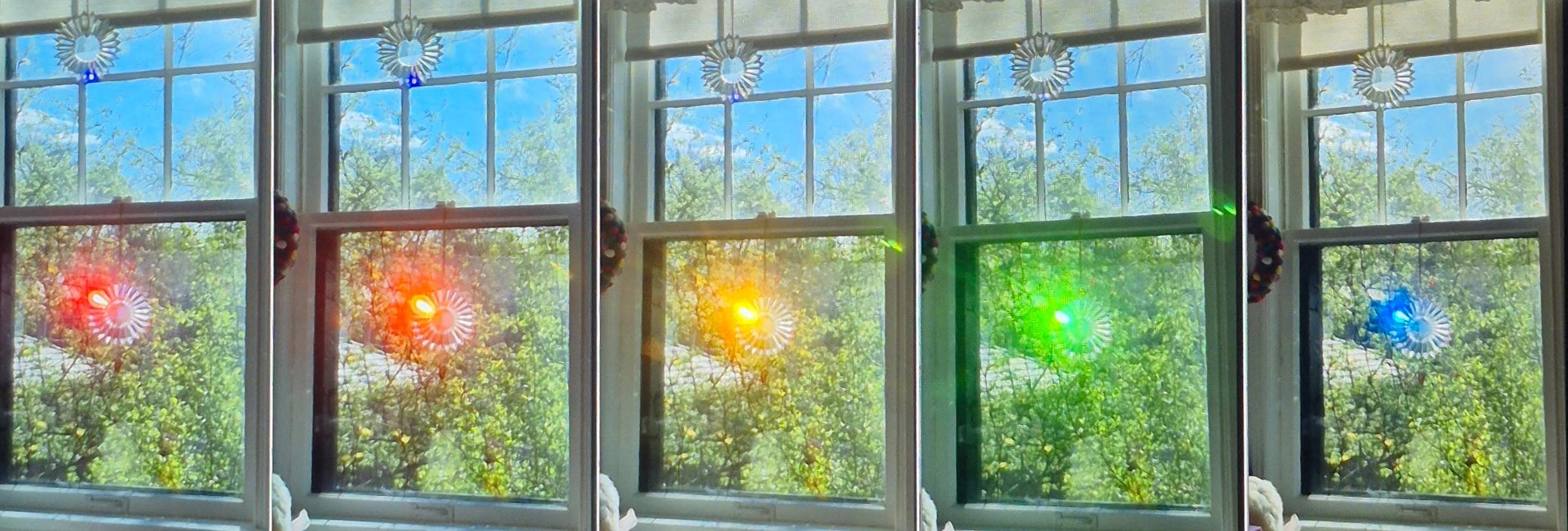
Hanging Your Prism SunCatcher
Where is the best place to hang a suncatcher?
The best place to hang a suncatcher is in a sunny window that gets direct light for at least part of the day, like an east‑ or west‑facing window. Hanging it where the sun actually shines through the glass and lets the prism bend and scatter the light into visible rainbows across your walls and floors. High, unobstructed windows, glass doors, and bright stairwells usually give the strongest rainbow show. I have two SunRain lead crystal prism suncatchers in our west bathroom window. Mostly white (walls, sink, tub) looks great with the color spectrums. The rainbows travel until they meet a solid surface, so they extend out the bathroom door to the stairwell to our living room. And they are just as brilliant across the room.
Brightness Expected from Prisms
Do suncatchers rainbows give off very bright light?
Suncatcher rainbows are bright enough to sparkle and catch your eye, but they’re not harsh like staring into a flashlight or the sun. The crystal spreads sunlight into many small beams, so you see patches of intense color rather than one blinding spot. In a normal room they feel playful and lively, but beautifully rendered and fascinating to watch. Honestly, I was astounded when I saw the effect these lead crystal chandelier prisms had with the right kind of light.
Eye Safety
Is suncatcher rainbow light safe for your eyes?
It’s safe to enjoy suncatcher rainbows on your walls, floors, and furniture, but you should never stare directly at the sun or into a concentrated reflection. A prism simply bends and separates sunlight; the rainbow spots it creates around your room are comfortable to look at in passing. As with any bright sunlight, use common sense—avoid aiming strong reflections right into your eyes at close range.
Colors in the Rainbow
How many colors are in a suncatcher rainbow?
Most of us are taught that a rainbow has seven colors—red, orange, yellow, green, blue, indigo, and violet. In reality the spectrum is continuous, so your suncatcher shows many subtle shades that blend smoothly from one color into the next. That’s why the bands can look richer and more complex than the simple ROYGBIV list.
Best Glass for a Prism
What is the best glass for a suncatcher?
If you want strong, crisp rainbows, high‑quality crystal glass with a high refractive index is the best choice. Cut crystal prisms throw sharper, more colorful light than basic window glass, plastic beads, or thin stained glass. Colored glass pieces are beautiful too, but they create glowing shapes rather than true prism rainbows.
Cost of a Suncatcher
How much does a suncatcher usually cost?
Simple, mass‑produced suncatchers can cost just a few dollars, while handmade pieces with premium crystal and sturdy hardware are typically priced higher. As the size of the prism, complexity of the design, and quality of materials go up, so does the price. Custom or large statement suncatchers can be closer to fine art than a trinket.
Materials Used to Make Suncatchers
What do people use to make suncatchers?
Most suncatchers are made from some combination of glass or crystal prisms, beads, wire or chain, and a secure hanging hook or loop. Makers also use metal rings, stained glass, decals, or even resin to hold pieces together and add design details. The key ingredients are transparent materials that catch light and safe, reliable hardware to hold everything in place.